Beautiful Plants For Your Interior
Every year, thousands of people under overwhelming stress reach for something they believe is safe, legal, and effective. That something is synthetic cannabinoids — street products like K2, Spice, and Black Mamba — and the reality is nothing short of a public health emergency. This comprehensive guide unpacks why stressed users choose synthetic cannabinoids, risks and alternatives that can genuinely help.
14+
Peer-reviewed studies reporting deaths linked to synthetic cannabinoid use
6.4%
US high school students reporting synthetic cannabinoid use (Nevada YRBS, 2023)
100s
Different SC compounds discovered globally — new ones emerge constantly
#1
Reason people continue using: stress relief and emotional self-medication
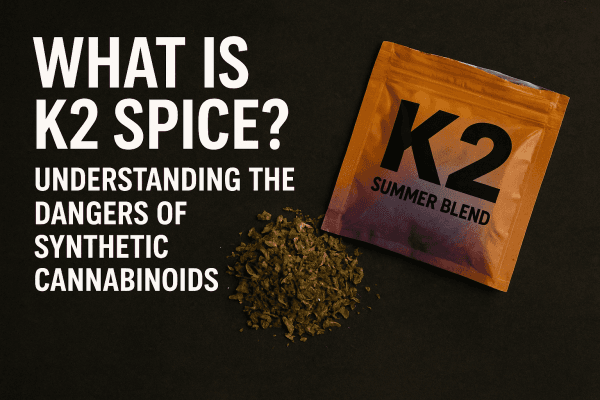
Synthetic cannabinoid products like K2 and Spice are often misleadingly packaged as harmless herbal products. Image: Public domain.
They go by dozens of street names — K2, Spice, Spice Gold, Black Mamba, Yucatan Fire, Mojo, Scooby Snax — but they share one dangerous characteristic: they are full agonists at brain cannabinoid receptors, binding far more powerfully and unpredictably than natural THC. The result is a profoundly more dangerous substance with virtually zero quality control.
Key Fact: Unlike natural cannabis, which contains hundreds of compounds that moderate its effects, synthetic cannabinoids are pure receptor activators. A batch that seems fine one week can be lethally potent the next — users have no way to know what dose they are actually taking.
Synthetic cannabinoids are produced in clandestine laboratories — often overseas — and then dissolved in solvents and sprayed onto dried plant material before packaging. They have been sold through gas stations, head shops, and online vendors, deliberately labelled “not for human consumption” to sidestep legal oversight. As one formulation gets banned, manufacturers tweak the molecular structure slightly to produce a technically “new” compound, allowing the cycle to continue.
Understanding why stressed users choose synthetic cannabinoids risks and alternatives requires us to look at the very real pain points that drive this behaviour. Stress is not just uncomfortable — for many people, it is a daily, relentless experience that disrupts sleep, work, relationships, and physical health. When conventional support feels out of reach or stigmatised, people search for quick, accessible relief.
Research consistently shows that stress relief is the most commonly reported reason people continue using cannabinoids of any kind. Higher levels of chronic stress are strongly associated with an increased risk of substance use disorders, partly because stress weakens the individual’s psychological coping mechanisms and makes the short-term comfort of substances feel more appealing.
For synthetic cannabinoids specifically, the appeal is amplified by several factors that have little to do with the drug’s actual effects:
“The promise of something ‘legal’ or ‘safer’ is one of the most powerful and dangerous misconceptions in modern substance use. The word ‘synthetic’ does not mean safer — it often means the opposite.”
This combination of factors explains precisely why stressed users choose synthetic cannabinoids risks and alternatives must be discussed openly and without judgment — because the decision is rarely made carelessly. It is made by people in real distress, reaching for what appears to be a rational solution.
When we examine why stressed users choose synthetic cannabinoids risks and alternatives, the “legal high” narrative stands out as the most persistent and most lethal myth. Here is how the myths stack up against the evidence:
❌ Myth
“It’s sold legally in shops, so it must be safe.”
✅ Reality
Legality does not equal safety. Most are now Schedule I controlled substances. Retailers exploit regulatory gaps that close constantly.
❌ Myth
“It’s just fake weed — basically the same as cannabis.”
✅ Reality
Synthetic cannabinoids are full agonists up to 100x more potent than THC. They cause psychosis, seizures, kidney failure, and death at rates far exceeding natural cannabis.
❌ Myth
“I can’t get addicted to it — it’s herbal.”
✅ Reality
Addiction potential is higher than cannabis. Withdrawal can be severe and medically dangerous.
❌ Myth
“It helps me handle stress and anxiety.”
✅ Reality
Existing stress or anxiety before using synthetic cannabinoids frequently results in a worsened experience. They escalate — not reduce — anxiety for most users over time.
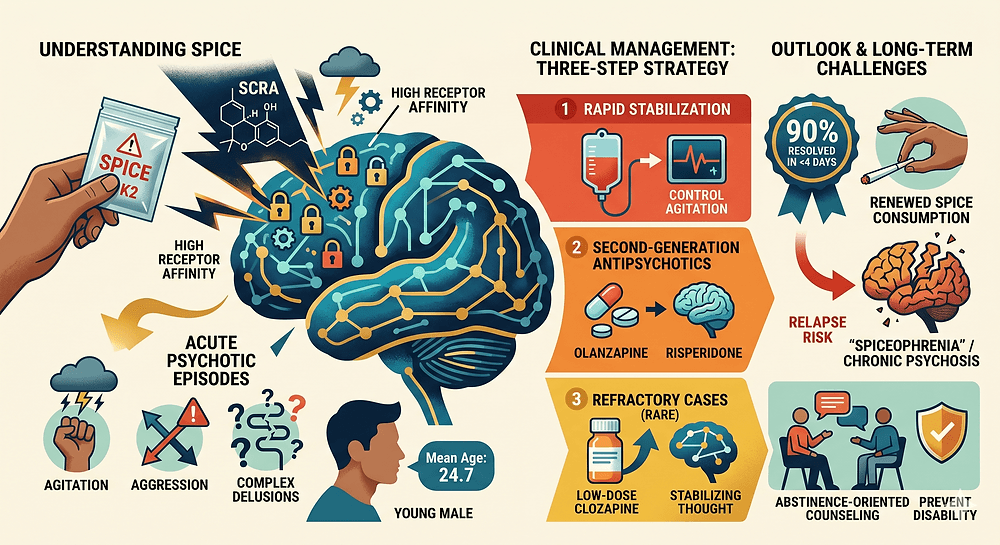
Synthetic cannabinoids affect multiple brain regions, triggering effects far more severe and unpredictable than natural THC.
| Health Risk | Severity | Notes |
|---|---|---|
| Tachycardia (rapid heart rate) | HIGH | Most commonly reported toxicity symptom in clinical studies |
| Seizures / convulsions | HIGH | Synthetic cannabinoids have a higher potential to trigger convulsive crisis than natural cannabis |
| Acute kidney injury / failure | HIGH | Multiple outbreak clusters linked specifically to SC use, not seen with natural cannabis |
| Stroke | HIGH | Haemorrhagic and ischaemic strokes reported in young users |
| Respiratory depression | HIGH | 12% of paediatric cases requiring mechanical ventilation in one review |
| Cardiac arrest / death | HIGH | 14+ studies have reported SC-related deaths; AB-CHMINACA and MDMB-CHMICA most implicated |
| Hypertension | MODERATE | Frequently co-occurs with tachycardia during acute intoxication |
| Nausea / vomiting | MODERATE | Among the most common presenting complaints in emergency settings |
The neuropsychiatric consequences are equally alarming. Why stressed users choose synthetic cannabinoids risks and alternatives is partly answered by noting a cruel irony: the very people using these substances to manage stress and anxiety are among those most vulnerable to their psychiatric side effects.
🚨
Critical Warning: Feelings of stress or anxiety before using synthetic cannabinoids frequently result in a worse, not better, experience. These substances often amplify negative emotional states rather than relieving them. If you or someone you know is using synthetic cannabinoids to manage stress, professional support is available and effective.
One of the most underestimated aspects of why stressed users choose synthetic cannabinoids risks and alternatives is the addiction potential. Many users assume that because these products are marketed as “herbal” or “natural,” they cannot produce true chemical dependence. This assumption is deeply wrong.
Research indicates that the risk of becoming dependent on synthetic cannabinoids is higher than for natural cannabis. Users develop tolerance rapidly — meaning they need increasing doses to achieve the same effect — and the withdrawal syndrome that follows attempted cessation is both more severe and potentially life-threatening compared to natural cannabis withdrawal.
Studies using Global Drug Survey data confirm that SCRA (synthetic cannabinoid receptor agonist) users report significantly more severe withdrawal symptoms compared to high-potency herbal cannabis users, and much greater difficulty with dose titration — meaning users struggle to control how much they take.
Important: Withdrawal from synthetic cannabinoids should never be attempted without medical supervision. If you or someone you know wants to stop, please contact a healthcare professional or addiction service first. Medical monitoring during withdrawal can be life-saving.
Examining why stressed users choose synthetic cannabinoids risks and alternatives requires us to identify who is most vulnerable. Understanding these groups helps us target education, intervention, and support more effectively.
Adolescents and Young Adults — SCs appeal to young people because of low cost, deceptive marketing, and their inability to be detected on standard drug screens. Academic pressure, social anxiety, and peer pressure are common drivers. Research shows a meaningful percentage of high school students have used these substances.
Military Personnel and Veterans — Drug testing requirements make traditional cannabis too risky for service members seeking relief from combat stress, PTSD, or deployment pressures. Synthetic cannabinoids — undetectable on standard urinalysis — become an appealing, dangerous substitute.
Individuals Under Financial Stress — Synthetic cannabinoids are cheap and widely available. For people experiencing poverty, unemployment, or housing instability, they represent accessible relief from relentless socioeconomic pressure.
People Self-Medicating Mental Health Conditions — Those with undiagnosed or untreated anxiety, depression, or PTSD may turn to synthetic cannabinoids in the absence of accessible mental healthcare. The irony is that these substances frequently worsen the very conditions they are meant to relieve.
Those in Heavily Regulated Professions — Truck drivers, healthcare workers, athletes, and others subject to routine drug testing may turn to SCs believing they are a “safe” alternative that won’t cost them their careers.
The most empowering part of understanding why stressed users choose synthetic cannabinoids risks and alternatives is recognising that there are genuine, evidence-based approaches to managing stress — without the catastrophic risks. The following alternatives are not just theoretical; they are supported by robust clinical research. 
Evidence-based stress relief — mindfulness, exercise, and therapy — address the root causes of stress rather than masking them.why stressed users choose synthetic cannabinoids risks and alternatives
🧘
An 8-week structured programme with strong evidence for reducing anxiety, depression, and chronic stress without side effects.
🏃
Exercise reduces cortisol and adrenaline, releases endorphins, and has antidepressant effects equivalent to medication in some studies.
🗣️
Evidence-based talking therapy that helps identify and change thought patterns driving stress and anxiety. Available online and in person.why stressed users choose synthetic cannabinoids risks and alternatives
😴
Chronic stress worsens sleep; poor sleep worsens stress. Structured sleep routines break this cycle and dramatically improve wellbeing.
🌿
Ashwagandha (adaptogen), chamomile, and lavender have evidence for mild anxiolytic effects and are genuinely safe with no abuse potential.
👥
Social connection is one of the most powerful buffers against stress. Support groups, community activities, and honest conversations reduce isolation.
If stress has become persistent, overwhelming, or is driving substance use, it is time to speak to a professional. A GP, psychologist, or addiction counsellor can assess what is happening, screen for underlying anxiety or depression, and create a personalised treatment plan that actually addresses the root cause — not just the symptom.why stressed users choose synthetic cannabinoids risks and alternatives
Understanding why stressed users choose synthetic cannabinoids risks and alternatives also means acknowledging that professional help is not a sign of weakness. It is the most courageous and effective step available.
The core answer to why stressed users choose synthetic cannabinoids risks and alternatives is this: the choice is driven by desperation, misinformation, and a lack of accessible support — not stupidity or moral failure. Addressing this requires both individual education and systemic improvements in mental health accessibility. Evidence-based resources from the HSE’s drug and alcohol information service offer an important starting point for anyone seeking guidance in Ireland.
If you are concerned about your own use of synthetic cannabinoids, or about someone you care about, reaching out is the most important step you can take. You do not need to be at “rock bottom” to deserve support.why stressed users choose synthetic cannabinoids risks and alternatives
The HSE Drugs and Alcohol Information Service provides comprehensive, evidence-based resources. The national helpline offers free, confidential support: 1800 459 459.
FRANK offers free, confidential advice: 0300 123 6600 or talktofrank.com.
SAMHSA National Helpline: 1-800-662-4357 (free, confidential, 24/7, treatment referral service).
Whether you’re stressed, struggling, or supporting someone else, expert help is available right now. The first step is always the hardest — and the most important.Find Help in IrelandRead the FAQs
These questions represent the most common searches related to why stressed users choose synthetic cannabinoids risks and alternatives — answered clearly and factually.
Why do stressed users choose synthetic cannabinoids instead of natural cannabis? ▼
Stressed users choose synthetic cannabinoids primarily because they are marketed as “legal highs,” are undetectable on standard drug tests, and are widely available at convenience stores and online. The perception of legality and safety is a powerful lure — especially for people under occupational, academic, or financial stress who want relief without legal consequences. However, this perception is dangerously misleading: why stressed users choose synthetic cannabinoids risks and alternatives is a question whose answer reveals far greater dangers than most users anticipate. Synthetic cannabinoids carry far greater health risks than natural cannabis — they are not a safer substitute.
Are synthetic cannabinoids actually legal? ▼
No — not in any meaningful protective sense. While some early formulations were briefly sold legally as “herbal incense,” the vast majority of synthetic cannabinoids are now classified as Schedule I controlled substances in the United States and are illegal under equivalent laws in most countries, including Ireland and the UK. Manufacturers continuously tweak chemical structures to temporarily evade bans, but legislation updates constantly. Using, possessing, or distributing synthetic cannabinoids carries serious criminal penalties.
What are the most dangerous health risks of synthetic cannabinoids? ▼
The most dangerous health risks include severe cardiac events (rapid heart rate, heart attack), psychosis and paranoia, seizures, acute kidney failure, stroke, coma, and death. Unlike natural cannabis, synthetic cannabinoids bind to brain receptors far more intensely and unpredictably, making accidental overdose extremely easy. Tachycardia and seizures are among the most commonly reported toxic symptoms in peer-reviewed clinical studies. Third-generation synthetic cannabinoids show even higher rates of neuropsychiatric complications.why stressed users choose synthetic cannabinoids risks and alternatives
Can synthetic cannabinoids cause addiction and withdrawal? ▼
Yes — and the addiction risk is higher than that of natural cannabis (THC). Withdrawal from synthetic cannabinoids can be severe and even life-threatening, involving intense anxiety, depression, nausea, headaches, heart palpitations, and in serious cases, psychotic episodes. Users often continue using despite adverse effects because the substances are cheap, readily available, and tolerance develops very rapidly. Never attempt withdrawal without medical supervision.
What are safe and effective alternatives for stress relief? ▼
Evidence-based alternatives for stress relief include: regular physical exercise (reduces cortisol, improves mood), mindfulness-based stress reduction (MBSR), cognitive behavioural therapy (CBT), improved sleep hygiene, social support networks, breathwork and progressive muscle relaxation, and professional counselling or therapy. Herbal supplements like ashwagandha and chamomile may also support relaxation with genuine safety profiles. When stress is severe or persistent, a GP or mental health professional is always the best first call. These are the true answers to why stressed users choose synthetic cannabinoids risks and alternatives — the alternatives are real, accessible, and effective.
How are synthetic cannabinoids different from natural cannabis? ▼
Natural cannabis contains THC, a partial agonist of brain cannabinoid receptors, alongside hundreds of other compounds (terpenes, CBD, etc.) that moderate its effects. Synthetic cannabinoids are full agonists — they bind far more powerfully and completely to the same receptors, producing much stronger and less predictable effects. There is also no quality control: the chemical composition of synthetic cannabinoid products varies wildly from batch to batch, and some have been found to be 100 times more potent than THC. Every use is genuinely unpredictable.why stressed users choose synthetic cannabinoids risks and alternatives
Who is most at risk of using synthetic cannabinoids for stress? ▼
High-risk groups include: adolescents and young adults facing academic or social pressure; military personnel and veterans subject to drug testing; individuals in high-stress occupations; people experiencing poverty or financial hardship (low cost is a major driver); and those with underlying anxiety, depression, or PTSD who are self-medicating without professional guidance. Understanding why stressed users choose synthetic cannabinoids risks and alternatives helps target these groups with early, compassionate intervention.
Do synthetic cannabinoids show up on a drug test? ▼
Standard urine drug screens typically do not detect synthetic cannabinoids, as they are structurally different from THC. This is, in fact, one of the primary reasons stressed users in regulated professions or subject to drug testing choose them. However, specialised testing panels can detect many synthetic cannabinoids, and testing technology is rapidly improving. The undetectability of these substances does not make them safer — it simply adds another layer of misinformation that leads to more dangerous use.why stressed users choose synthetic cannabinoids risks and alternatives
Where can I get help if I or someone I know is using synthetic cannabinoids? ▼
In Ireland, the HSE Drugs and Alcohol Information Service offers free, confidential support at 1800 459 459. In the UK, contact FRANK at 0300 123 6600. In the US, SAMHSA’s National Helpline (1-800-662-4357) is available 24/7. Speaking to a GP or addiction counsellor is the most important first step — withdrawal from synthetic cannabinoids can be medically serious and should never be managed alone. You deserve real support for real stress.
Can stress and anxiety get worse after using synthetic cannabinoids? ▼
Yes — this is one of the cruelest paradoxes of synthetic cannabinoid use. Existing feelings of stress or anxiety before using often result in a significantly worsened experience during the drug’s effects. Over time, chronic use disrupts the brain’s natural stress-regulation systems, making the user more anxious and less emotionally resilient when not using. The substance that was meant to relieve stress ends up becoming one of its major causes. This cycle is a central reason why stressed users choose synthetic cannabinoids risks and alternatives need to be understood together — breaking the cycle requires addressing both.