Beautiful Plants For Your Interior
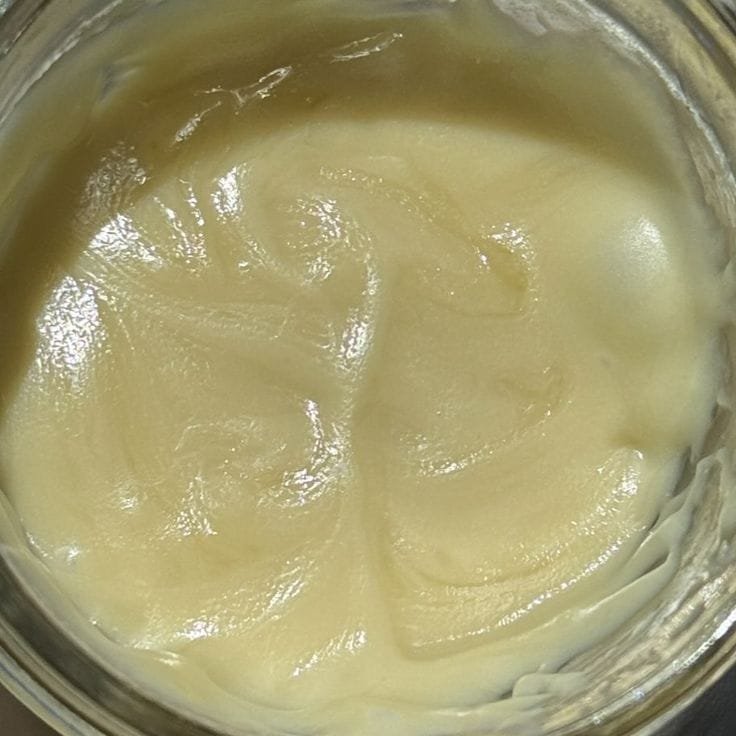
What is live rosin used for? In short: live rosin is used for dabbing and vaping, for infusing edibles and drinks, for making tinctures and capsules, and for blending into topical balms — all because it preserves the plant’s original terpene and cannabinoid profile without using any chemical solvents. This guide breaks down each use case in detail, shows how live rosin is made, and answers the most common questions people search for.
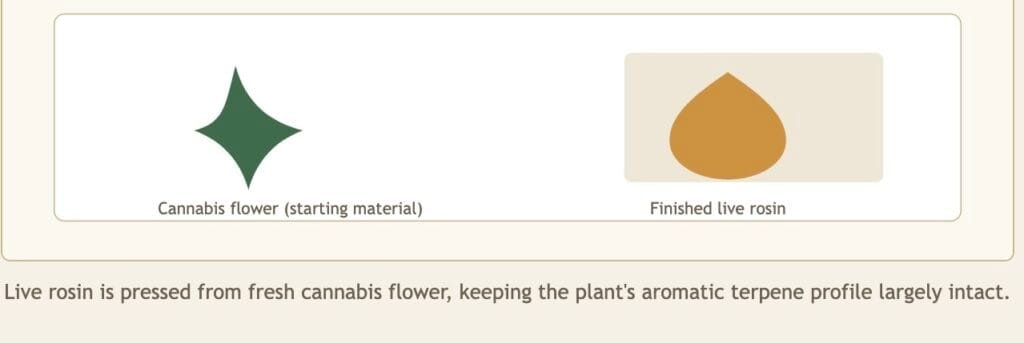
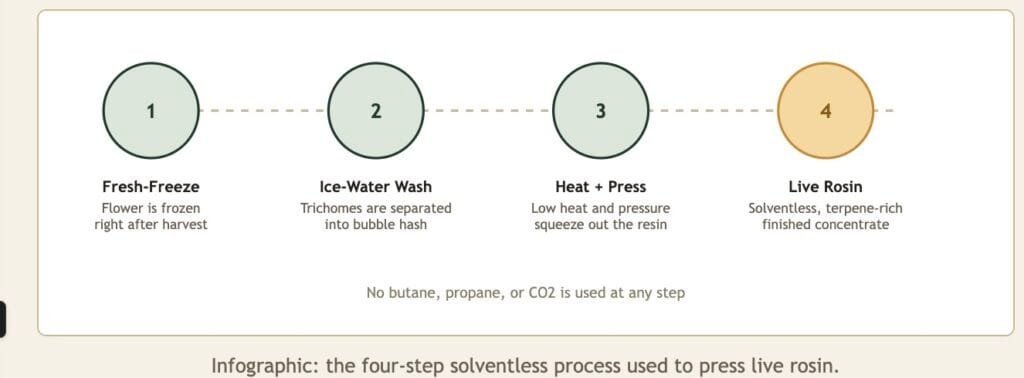
Live rosin is a solventless cannabis concentrate made by applying heat and pressure to fresh-frozen cannabis flower or ice-water hash (often called bubble hash). Unlike concentrates made with butane, propane, or CO2, live rosin uses no chemical solvent at all — only ice, water, heat, and pressure. Because the starting material is frozen shortly after harvest rather than dried and cured, live rosin tends to retain more of the plant’s original terpenes, which is why it’s known for a strong, fresh aroma and flavor. According to the Wikipedia glossary of cannabis terms, “live” extracts specifically refer to concentrates made from freshly harvested, flash-frozen plant material rather than dried flower.
Quick definition: Rosin = pressed with heat + pressure. Live = made from fresh-frozen plant material, not dried flower. Together, “live rosin” describes a solventless concentrate pressed from frozen-fresh cannabis.
Understanding the process helps explain why live rosin is used the way it is — its texture, purity, and flavor all come from how it’s produced.
Now to the core question people search for most: what is live rosin used for, in practice? Live rosin shows up in four main categories of use, and each one takes advantage of a different property of the concentrate — its potency, its flavor, its purity, or its texture.
| Use case | Why live rosin is chosen | Typical form |
|---|---|---|
| Dabbing / vaping | Full flavor, fast onset, no solvent residue | Sauce, badder, or diamonds |
| Medicinal / wellness use | Consistent cannabinoid ratios, solventless purity | Tinctures, capsules, low-dose vapes |
| Cooking & edibles | Decarboxylated rosin infuses cleanly into fats and oils | Infused butter, oil, or honey |
| Topicals & skincare | No solvent residue near skin; rich in terpenes | Balms, salves, lotions |
The most common answer to “what is live rosin used for” is dabbing. Because live rosin is pressed rather than chemically extracted, it tends to vaporize at lower temperatures while preserving a fuller flavor profile than solvent-based concentrates. People use a small “dab” of live rosin in a dab rig or a compatible vaporizer, heating it just enough to produce vapor without scorching the terpenes. Many live-rosin vape cartridges and disposable pens are also made this way, giving users a solventless option in a more portable format.
Beyond recreation, what is live rosin used for on the wellness side? Patients and consumers who want measurable, consistent dosing often prefer solventless extracts because there’s no risk of leftover processing chemicals. Live rosin is frequently converted into tinctures (drops taken under the tongue), capsules, or low-dose vape formats so people can track intake more precisely. As with any cannabis product used for symptom management, people should talk with a healthcare provider about appropriate use, especially alongside other medications.
A third answer to what is live rosin used for is home and commercial cooking. Because live rosin is already a concentrated, solventless extract, it can be gently decarboxylated (heated to activate its compounds) and then melted into butter, oil, or honey to make infused edibles. Bakers and home cooks like it because a little goes a long way, and its robust terpene profile can add flavor as well as effect to a recipe — though high heat can burn off delicate terpenes, so low-and-slow infusion is preferred.
Live rosin is increasingly used to make cannabis-infused syrups, coffee, and mocktails, using the same gentle-infusion approach as cooking with fats — dissolving decarboxylated rosin into a fat- or alcohol-based carrier before adding it to a beverage recipe.
The fourth major category answering what is live rosin used for is topical application. Because it contains no solvent residue, live rosin is a popular ingredient in balms, salves, and lotions intended for localized use on skin and joints. These products are generally non-intoxicating when they don’t cross the skin barrier into the bloodstream, which is part of why they appeal to people who want the plant’s terpene and cannabinoid content without a psychoactive effect.
Some athletes and massage therapists incorporate live-rosin-infused oils into recovery routines, valuing the terpene aroma (like myrcene or pinene) alongside the physical act of massage.
Tap a category below to see a quick summary of that specific way live rosin is used.DabbingWellnessEdiblesTopicals
Small amounts are vaporized on a heated nail, banger, or in a live-rosin vape cartridge for fast-acting, flavor-forward inhalation.
People often compare live rosin with live resin, shatter, and distillate before deciding what to buy. If you’re weighing extraction methods against each other, our internal guide on live rosin vs. live resin: what’s the difference breaks down the terpene, potency, and production differences in more depth.
| Concentrate | Extraction method | Solvent used? |
|---|---|---|
| Live rosin | Heat + pressure on fresh-frozen material | No |
| Live resin | Chemical extraction from fresh-frozen material | Yes (e.g., butane) |
| Shatter / wax | Chemical extraction from dried/cured flower | Yes |
| Distillate | Distillation, further refined | Yes (during initial extraction) |
Illustrative examples compiled from publicly shared community discussions; names are representative, not verified individuals.
J
Jordan, home cook
Case study · Edibles
“I started using live rosin instead of trim-based butter for holiday baking because a small amount infused a full batch, and the flavor carried through better than I expected.”
P
Priya, wellness consumer
Case study · Tinctures
“Switching to a live-rosin tincture made it much easier to track my dose from night to night compared to smoking flower.”
M
Marcus, dispensary budtender
Case study · Retail insight
“Customers who ask what live rosin is used for are usually surprised to learn it also comes in topical and drink form, not just for dabbing.”
Live rosin is used for dabbing and vaping, for infusing edibles and drinks, for making tinctures and capsules, and for blending into topical balms and salves. Its solventless production makes it a popular choice across all of these categories.
Live rosin is generally far more concentrated than flower, so smaller amounts are typically used to reach a comparable or stronger effect. Potency varies by batch and starting material.
Because no chemical solvent is used in production, there’s no risk of residual solvent in the finished product, which is one reason some consumers prefer solventless extracts. Quality and safety still depend on the source material and production practices.
Yes. Once decarboxylated, live rosin can be melted into butter, oil, or honey and used the same way any cannabis-infused fat is used in recipes.
Both are made from fresh-frozen cannabis, but live rosin is pressed with heat and pressure (no solvent), while live resin is made using a chemical solvent such as butane. See our comparison guide for more detail.
Properly stored in an airtight container away from heat and light, live rosin can retain quality for several months, though flavor and potency are typically best when used within the first few weeks to months.
To recap what is live rosin used for: it’s a solventless cannabis concentrate used for dabbing and vaping, medicinal and wellness routines like tinctures and capsules, cooking and infused drinks, and topical products like balms and massage oils. Its appeal comes from the fresh-frozen starting material and the fact that no chemical solvents are involved in pressing it, which many consumers associate with a purer, more flavorful product.