Beautiful Plants For Your Interior

For many cancer patients, the difference between a manageable treatment day and a miserable one comes down to a single factor: timing. Knowing when to take anti-nausea medicine before chemotherapy is just as important as which medication you take. Antiemetics work best when they’re already active in your system before nausea signals even begin — wait too long, and you’re playing catch-up against symptoms that are much harder to reverse once they start.
This guide walks through the timing and dosing principles behind the most commonly prescribed antiemetics, based on guidelines from the National Comprehensive Cancer Network (NCCN), the Multinational Association of Supportive Care in Cancer (MASCC), and the American Society of Clinical Oncology (ASCO). If you’re newly starting chemotherapy or trying to get better control over recurring nausea, understanding this timing can make a real difference in your day-to-day quality of life. For practical home strategies to pair with your medication schedule, see our guide on reducing nausea after chemotherapy at home.
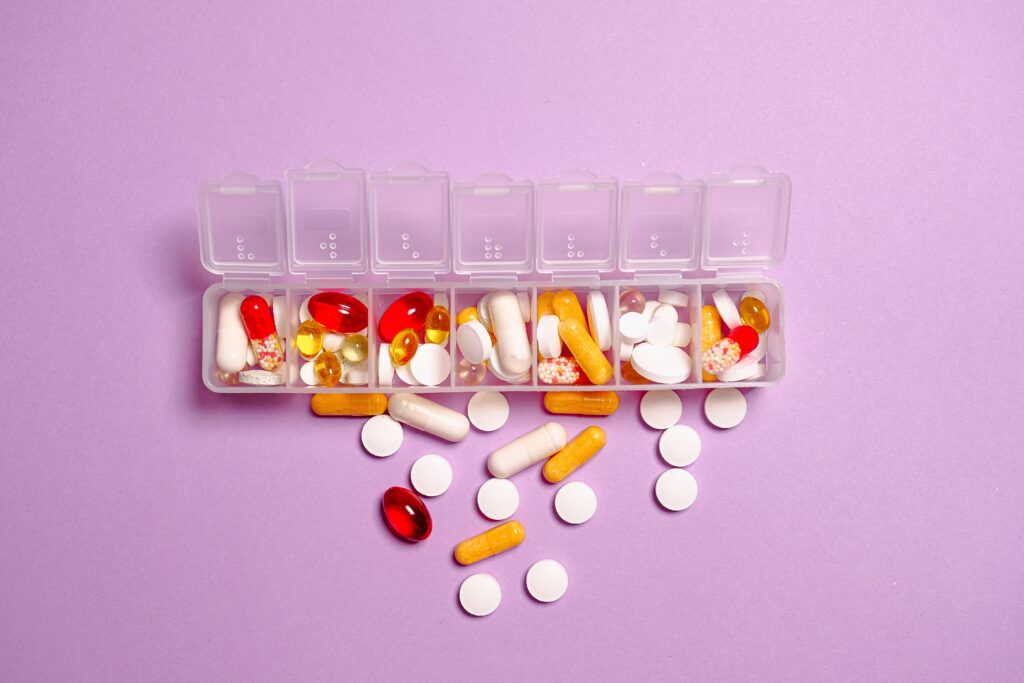
Chemotherapy triggers the release of serotonin and other chemical signals that activate nausea and vomiting pathways in the brain and gut, primarily through 5-HT3 receptors in the central nervous system and gastrointestinal tract. Antiemetic medications work by blocking these receptors — but they need time to reach effective levels in your bloodstream first.
This is the core reason behind the standard guidance on when to take anti-nausea medicine before chemotherapy: most first-line antiemetics are designed to be at peak effectiveness right as chemotherapy begins, not after symptoms have already started. Once the nausea pathway is fully activated, it becomes significantly harder for medication to “catch up” and bring symptoms back under control.
Ondansetron is the most widely prescribed antiemetic for chemotherapy patients. The standard guidance is to take an 8 mg to 24 mg oral dose, or an equivalent IV dose, approximately 30 minutes before chemotherapy begins, with the exact amount depending on how strongly emetogenic (nausea-inducing) your specific chemotherapy regimen is.
For moderately emetogenic chemotherapy, a typical schedule looks like:
For single-day highly emetogenic chemotherapy (such as cisplatin at 50 mg/m² or higher), a single 24 mg oral dose taken 30 minutes before treatment is a commonly used regimen. This is one of the clearest answers to the question of when to take anti-nausea medicine before chemotherapy: roughly half an hour ahead of your infusion, every time, regardless of how you’re feeling that morning.
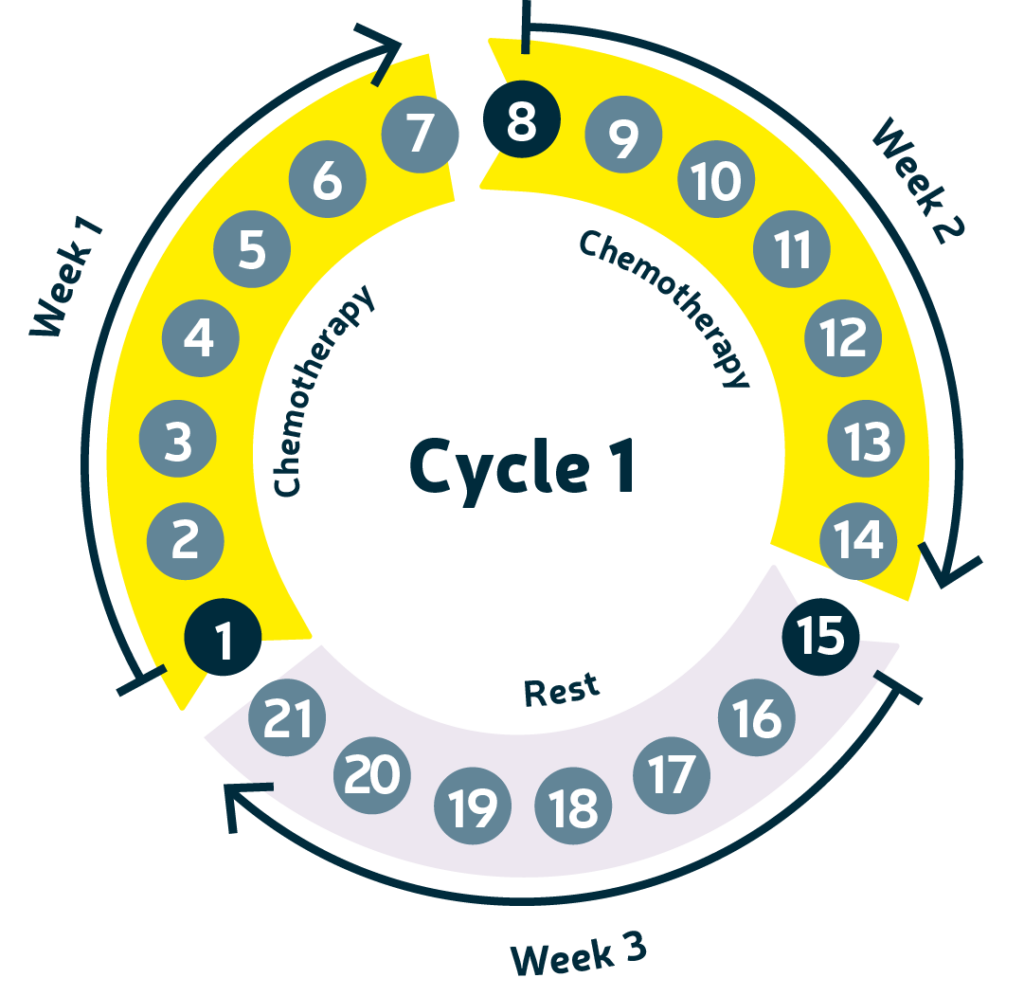
Dexamethasone, a corticosteroid, is frequently combined with a 5-HT3 receptor antagonist to improve control of both acute and delayed nausea. When used without an NK1 receptor antagonist, a common regimen is 20 mg on the day of chemotherapy, followed by lower doses (around 16 mg) on the following days. When combined with an NK1 antagonist, the dexamethasone dose is typically reduced.
Like ondansetron, dexamethasone for CINV prevention is generally taken before chemotherapy starts — often as part of the same pre-treatment medication bundle administered in the infusion suite, or as an oral dose taken at home an hour or so beforehand if you’re following an at-home pre-medication protocol.when to take anti-nausea medicine before chemotherapy
For patients receiving moderately to highly emetogenic chemotherapy — particularly regimens involving cisplatin, anthracycline-cyclophosphamide combinations, or carboplatin at higher doses — NCCN guidelines recommend adding an NK1 receptor antagonist to the standard 5-HT3 antagonist plus dexamethasone combination. This three-drug combination has been shown to significantly improve complete response rates, particularly for delayed nausea, compared to two-drug regimens.
Aprepitant is typically given as a 125 mg oral dose about an hour before chemotherapy on day one, followed by 80 mg doses on days two and three. Fosaprepitant (the IV form) is often given as a single dose that covers the same multi-day period, which can simplify the question of when to take anti-nausea medicine before chemotherapy for patients on multi-day regimens, since one infusion handles several days of coverage.when to take anti-nausea medicine before chemotherapy
Combination products like netupitant-palonosetron (NEPA) are designed to be taken as a single oral dose about an hour before chemotherapy, providing both 5-HT3 and NK1 receptor blockade in one step.
One of the most common mistakes patients make is treating antiemetics like painkillers — waiting until nausea starts before taking the next dose. Guidelines consistently emphasize scheduled dosing rather than reactive dosing for CINV prevention, because:when to take anti-nausea medicine before chemotherapy
If you’re asking when to take anti-nausea medicine before chemotherapy specifically because you’ve experienced breakthrough nausea in past cycles, the answer is often “earlier, and on a stricter schedule” — this is exactly the kind of feedback your oncology team needs to adjust your regimen for future cycles.when to take anti-nausea medicine before chemotherapy

While every regimen is individualized, a representative schedule for a patient on moderately emetogenic chemotherapy with a triple-drug antiemetic regimen might look like this:
This schedule illustrates why understanding when to take anti-nausea medicine before chemotherapy isn’t a single data point — it’s a layered schedule where different drug classes are timed to cover acute, delayed, and breakthrough phases of nausea.when to take anti-nausea medicine before chemotherapy
Purchase 24K California herbal potpourri with fast shipping from a trusted source. Enjoy premium quality, quick delivery, and a smooth shopping experience.when to take anti-nausea medicine before chemotherapy
If you miss your pre-chemotherapy dose, don’t simply skip it and wait for the next scheduled time — contact your oncology team or infusion nurse right away. In many cases, the dose can still be given, just with adjusted timing, or an alternative (such as an IV formulation with a faster onset) can be substituted.
when to take anti-nausea medicine before chemotherapy
For doses scheduled on days after chemotherapy, taking a missed dose as soon as you remember — unless it’s very close to the next scheduled dose — is generally appropriate, but always confirm with your pharmacist or care team rather than guessing, especially with medications like dexamethasone where timing affects both efficacy and side effect profiles.
Purchase 24K California Herbal Potpourri with fast shipping and discreet delivery. Premium-quality herbal blends available online for a smooth shopping experience.when to take anti-nausea medicine before chemotherapy
When should I take anti-nausea medicine before chemotherapy?
For most oral 5-HT3 receptor antagonists like ondansetron, the standard timing is about 30 minutes before chemotherapy begins. NK1 receptor antagonists and dexamethasone are often taken slightly earlier, around 60 minutes before treatment. Your exact schedule depends on your specific regimen, so always follow your oncology team’s instructions.
What happens if I take anti-nausea medication too late?
Taking antiemetics after nausea has already started is significantly less effective than taking them beforehand, because the medication has to work against an already-activated nausea pathway rather than preventing it from activating in the first place. This is why scheduled, preventive dosing is recommended over “as needed” dosing for chemotherapy.when to take anti-nausea medicine before chemotherapy
Can I take anti-nausea medicine the night before chemotherapy?
Some regimens do include an evening-before dose, particularly for dexamethasone in certain protocols, but this varies by regimen and should only be done if specifically prescribed. Don’t add extra doses on your own — contact your care team if you’re unsure about your specific schedule.
How long do I need to keep taking anti-nausea medication after chemotherapy?
Many regimens continue antiemetic dosing for 1 to 3 days after chemotherapy to cover the delayed nausea phase, which can affect up to 60% of patients. Stopping medication too early — even if you feel fine on day one — is one of the most common reasons for breakthrough nausea later in the cycle.
Is it safe to combine ondansetron, dexamethasone, and an NK1 antagonist?
Yes — this three-drug combination is a standard, guideline-recommended approach for moderately to highly emetogenic chemotherapy and has been shown to improve nausea control compared to using fewer medications. Your oncology team will determine the appropriate combination and doses based on your specific chemotherapy regimen.when to take anti-nausea medicine before chemotherapy
What should I do if I still feel nauseous despite taking my medication on time?
Breakthrough nausea despite correctly timed medication is common and is information your care team needs. Options may include adding olanzapine, adjusting dosing frequency, switching to a different 5-HT3 antagonist, or combining medication timing with complementary approaches like ginger or acupressure — covered in our guide to reducing nausea after chemotherapy at home.